
DIGITAL MEDIA AUTHENTICATION SERVICES
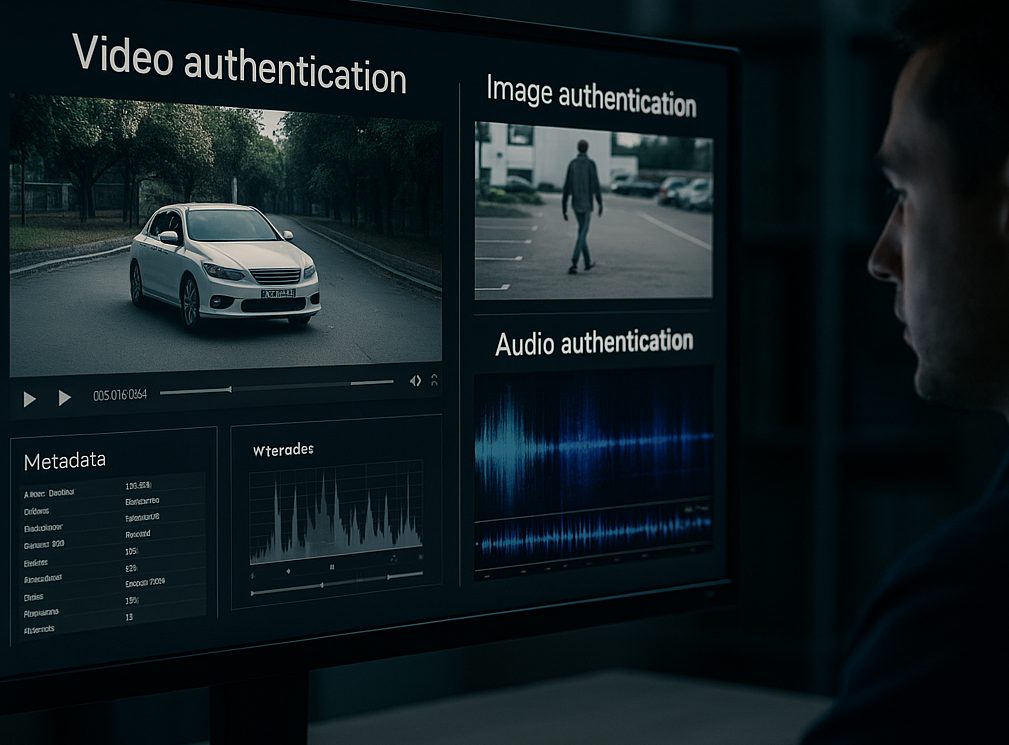
Digital media authentication examines whether a video, audio recording, or image is consistent with its claimed source and history.
4D Forensics evaluates file structure, metadata, encoding, compression, timing, continuity, visual or acoustic anomalies, and potential signs of editing or synthetic generation. The result is a technical opinion that explains the evidence, the supporting indicators, and any limitations.
DIGITAL MEDIA AUTHENTICA-TION SERVICES
Digital media authentication examines whether a video, audio recording, or image is consistent with its claimed source and history.
4D Forensics evaluates file structure, metadata, encoding, compression, timing, continuity, visual or acoustic anomalies, and potential signs of editing or synthetic generation. The result is a technical opinion that explains the evidence, the supporting indicators, and any limitations.
DIGITAL MEDIA AUTHENTICATION SERVICES
Digital media authentication examines whether a video, audio recording, or image is consistent with its claimed source and history.
4D Forensics evaluates file structure, metadata, encoding, compression, timing, continuity, visual or acoustic anomalies, and potential signs of editing or synthetic generation. The result is a technical opinion that explains the evidence, the supporting indicators, and any limitations.
PRESERVED SOURCE EVIDENCE
We work from original or native exports for the best possible analysis.
DEFINED FORENSIC SCOPE
Focused questions and testing that match your legal needs.
CLEAR FINDINGS & LIMITATIONS
Results that explain what the data does and does not support.
LITIGATION SUPPORT
Reports, exhibits, and expert testimony that hold up in court.
Questions an Authentication Examination May Address
- Is the file consistent with an original recording from the stated device or system?
- Has the file been edited, trimmed, spliced, transcoded, or re-saved?
- Are timestamps and metadata internally consistent?
- Do frame timing, audio continuity, or compression patterns indicate a change?
- Is the available file a copy, export, screen recording, or derivative?
- Are visible or audible anomalies caused by ordinary recording behavior or possible manipulation?
- Does the media contain indicators of synthetic video, cloned audio, or generated imagery?
- What can and cannot be concluded from the file that was produced?
Authentication is not limited to finding intentional tampering. Routine export, messaging, editing, cloud processing, platform downloads, and software conversion can all change a file. The examination should distinguish expected transformations from unexplained inconsistencies.
Digital Authentication You Can Rely On
SOURCE VERIFICATION
TAMPER DETECTION
METADATA ANALYSIS
CONSISTENCY CHECKS
COMPRESSION & FILE ANALYSIS
DETAILED REPORTING
Our authentication services are designed to answer one critical question: Is this real?
We conduct a comprehensive analysis to detect inconsistencies, manipulations, and fabrications — helping attorneys and their clients present evidence that stands up to the challenge.
How Authentication Works
1. Scope the Claim
We identify what is being asserted about the media, such as originality, continuity, source, date, device, editing history, or synthetic generation.
2. Preservation & Evaluation
The submitted files are documented. Technical properties, hash values when appropriate, metadata, codecs, dimensions, timing, and file relationships are recorded.
3. Examine Consistencies
The analysis may include file structure, encoding sequences, frame or sample timing, compression history, waveform and spectral continuity, metadata relationships, pixel behavior, lighting and shadow relationships, and comparison with known files.
4. Findings & Presentations
The report explains the observations, interpretations, alternative explanations, and limits. Findings may support consistency, inconsistency, evidence of modification, or an inconclusive result.
1. Scope the Claim
We identify what is being asserted about the media, such as originality, continuity, source, date, device, editing history, or synthetic generation.
2. Preservation & Evaluation
The submitted files are documented. Technical properties, hash values when appropriate, metadata, codecs, dimensions, timing, and file relationships are recorded.
3. Examine Consistencies
The analysis may include file structure, encoding sequences, frame or sample timing, compression history, waveform and spectral continuity, metadata relationships, pixel behavior, lighting and shadow relationships, and comparison with known files.
4. Findings & Presentations
The report explains the observations, interpretations, alternative explanations, and limits. Findings may support consistency, inconsistency, evidence of modification, or an inconclusive result.
What You May Receive
- A written technical authentication report
- File inventory and metadata findings
- Annotated examples of relevant anomalies or consistencies
- Comparison tables or timelines
- Expert consultation and litigation support
- Deposition or testimony when required
Technical Authentication &
Legal Authentication are Different
A forensic examiner evaluates the technical characteristics of the media. Legal authentication involves the foundation required to offer evidence in a proceeding. Technical findings can support or challenge that foundation, but the court decides admissibility and the weight given to the evidence.
Frequently Asked Questions About Authentication
Does missing metadata mean the file was altered?
Not necessarily. Metadata may be removed or rewritten during export, messaging, uploading, downloading, editing, or format conversion. The significance depends on the expected workflow and all of the details within the evidence file.
Can you detect a deepfake or AI-generated recording?
We can examine the media for technical and content-based indicators of synthetic generation or manipulation. Detection methods have limitations and can be affected by compression, re-recording, platform processing, and new generation methods. Conclusions should reflect the strength of the available evidence.
Is an edited file automatically unreliable?
No. A file may be trimmed, converted, redacted, or prepared for legitimate reasons. The key questions are what changed, whether relevant content was altered, whether the process is documented, and whether the file is being represented accurately.
What if only a copy is available?
A copy can still be examined, but it may support a narrower conclusion. The report should distinguish findings about the submitted copy from findings about the unavailable original.
Authentication Analytical Specialties
Our digital authentication services can determine whether a digital file is original, edited, or tampered with. We examine a wide range of forensic indicators, including file metadata, encoding structure, compression artifacts, frame timing, and potential edit traces. This process helps confirm integrity of the evidence and detect manipulations — intentional or otherwise.
VIDEO
- Verification of File Integrity and Originality
- Detection of Editing, Splicing, or Tampering
- Examination of Encoding and Compression Artifacts
- Source Device Identification and Verification
- Frame Sequence and Timecode Validation
- Metadata Extraction and Consistency Analysis
- Deepfake and Synthetic Media Detection
AUDIO
- Verification of Recording Integrity and Continuity
- Detection of Editing, Splicing, or Overdubbing
- Spectral and Waveform Analysis for Anomalies
- Background Noise and Acoustic Environment Consistency Checks
- Source Device and Codec Identification
- Metadata and File Structure Validation
- AI-Synthesized or Voice-Cloned Audio Detection
IMAGE
- Detection of Manipulation, Cloning, or Compositing
- Pixel-Level and Error-Level Analysis (ELA)
- Lighting, Shadow, and Reflection Consistency Evaluation
- File Format and Metadata Verification
- Camera Source Identification
- Compression History and Re-Saving Analysis
- AI-Generated or Synthetic Image Detection
Our authentication reports are comprehensive, scientifically supported, and ready for court. When the source or integrity of a digital evidence is in question, we deliver clear answers grounded in forensic science.
